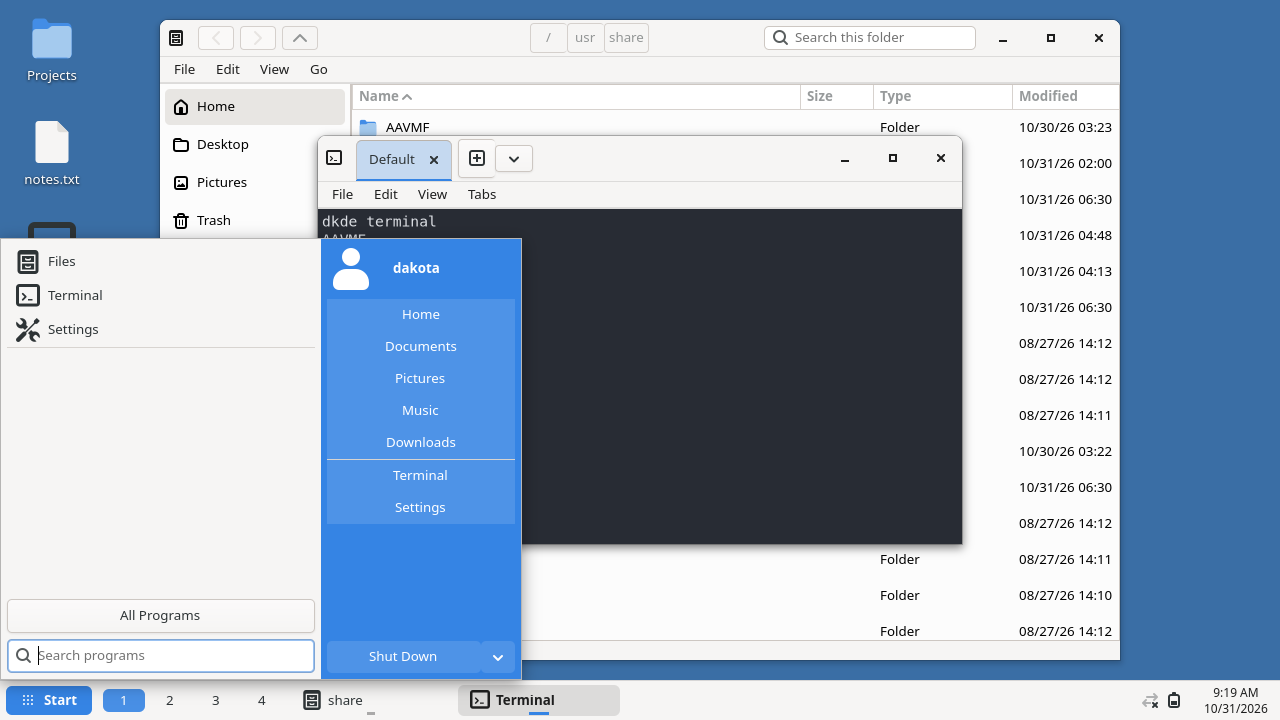
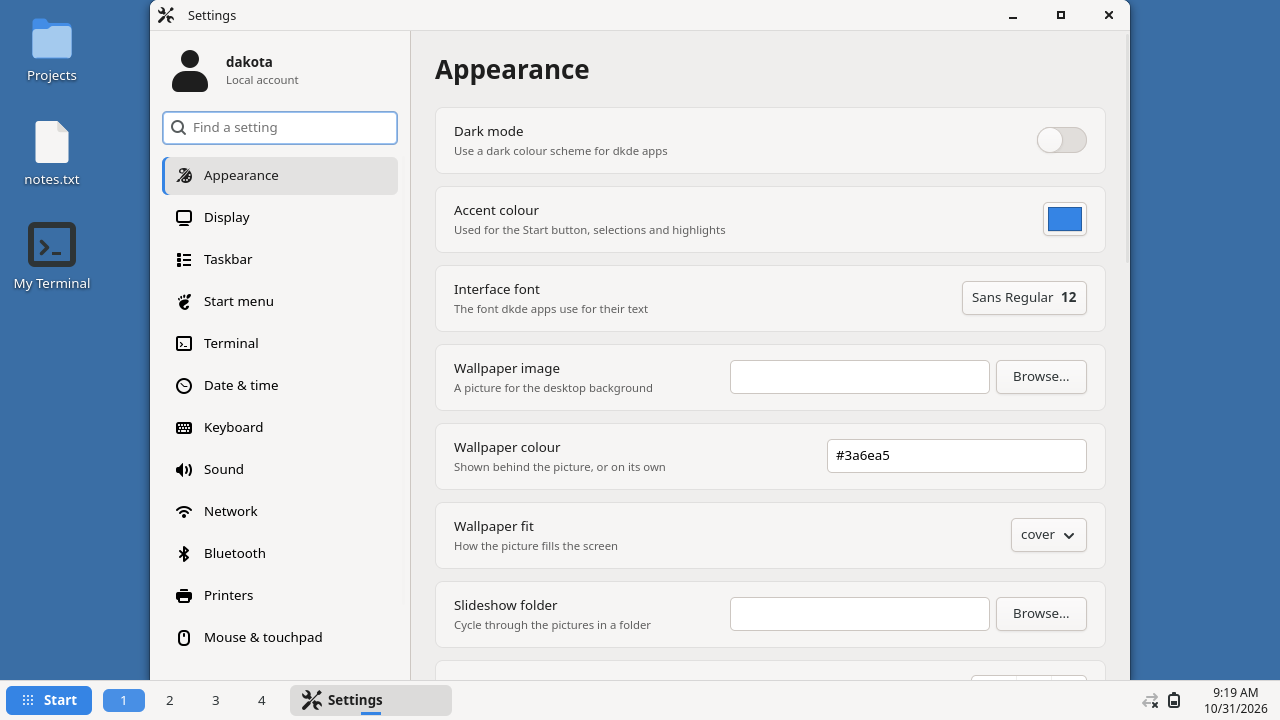
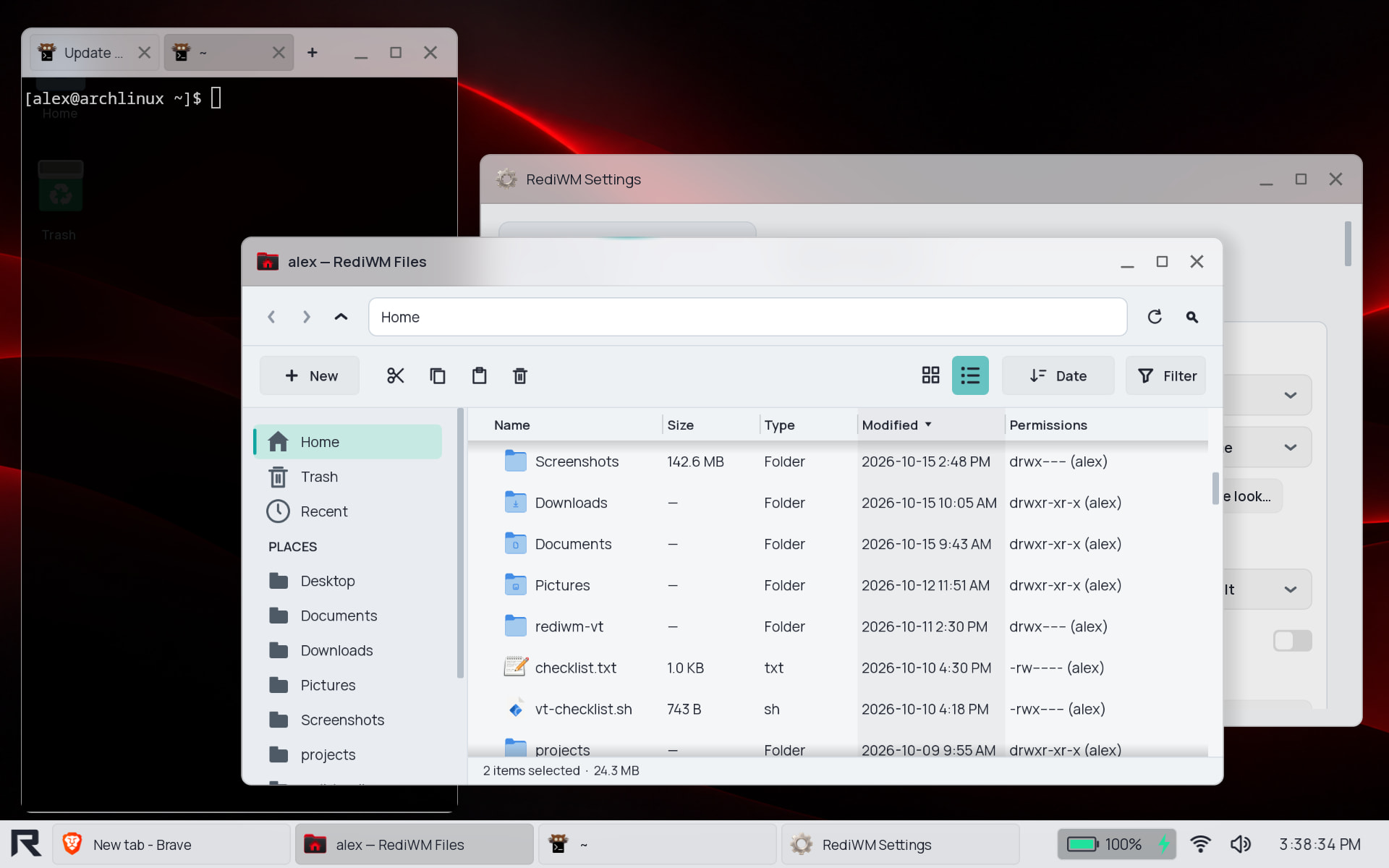
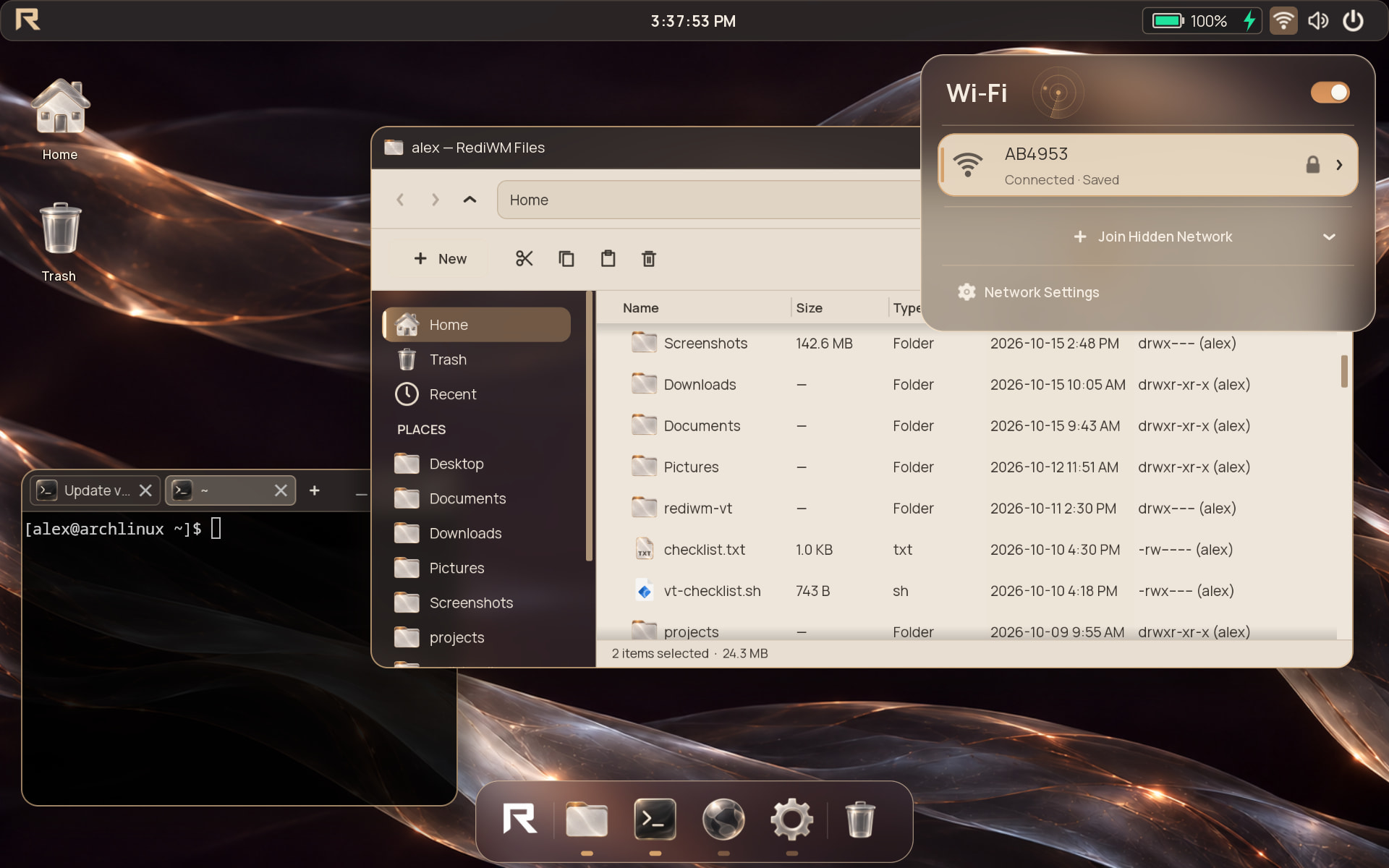
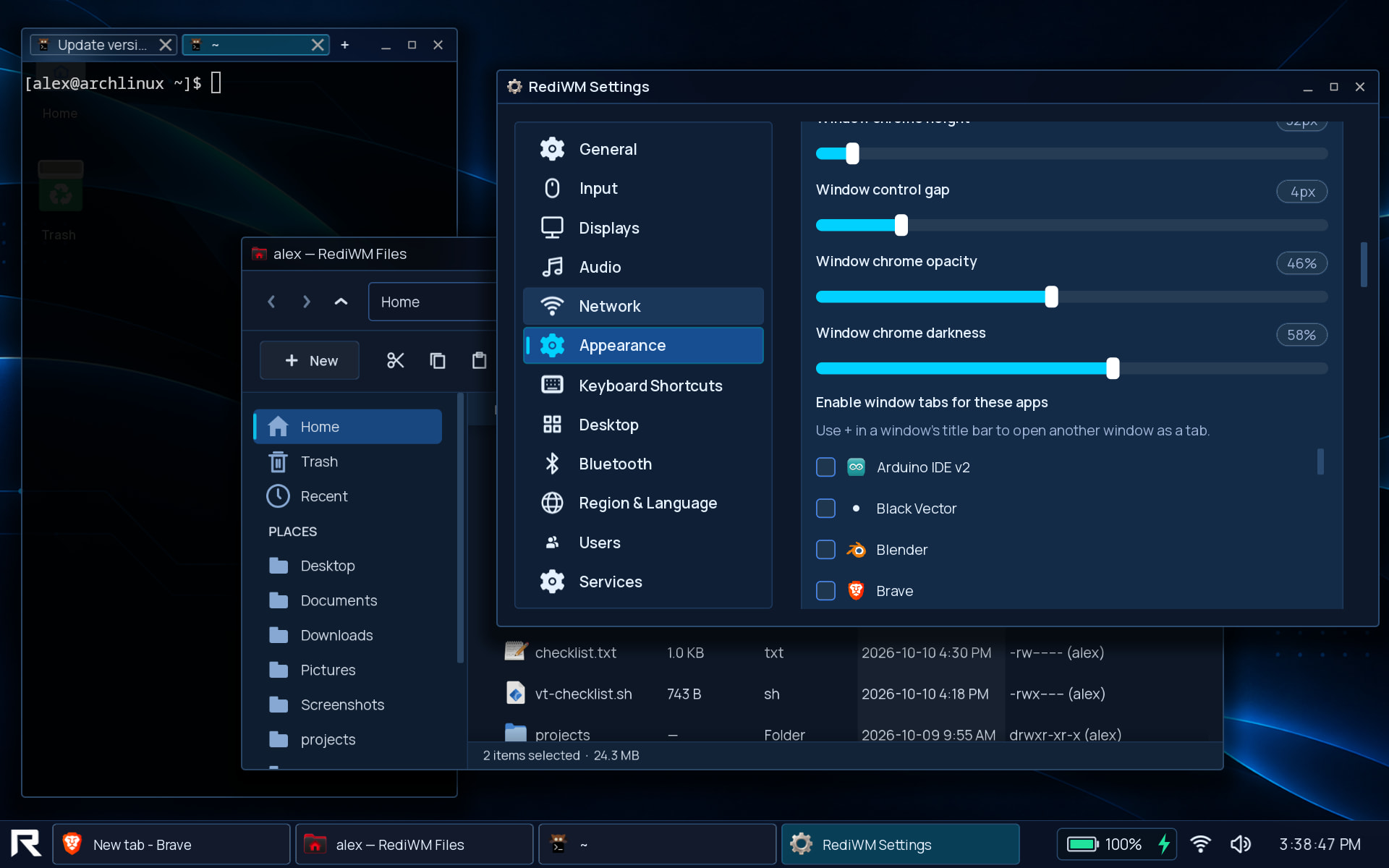
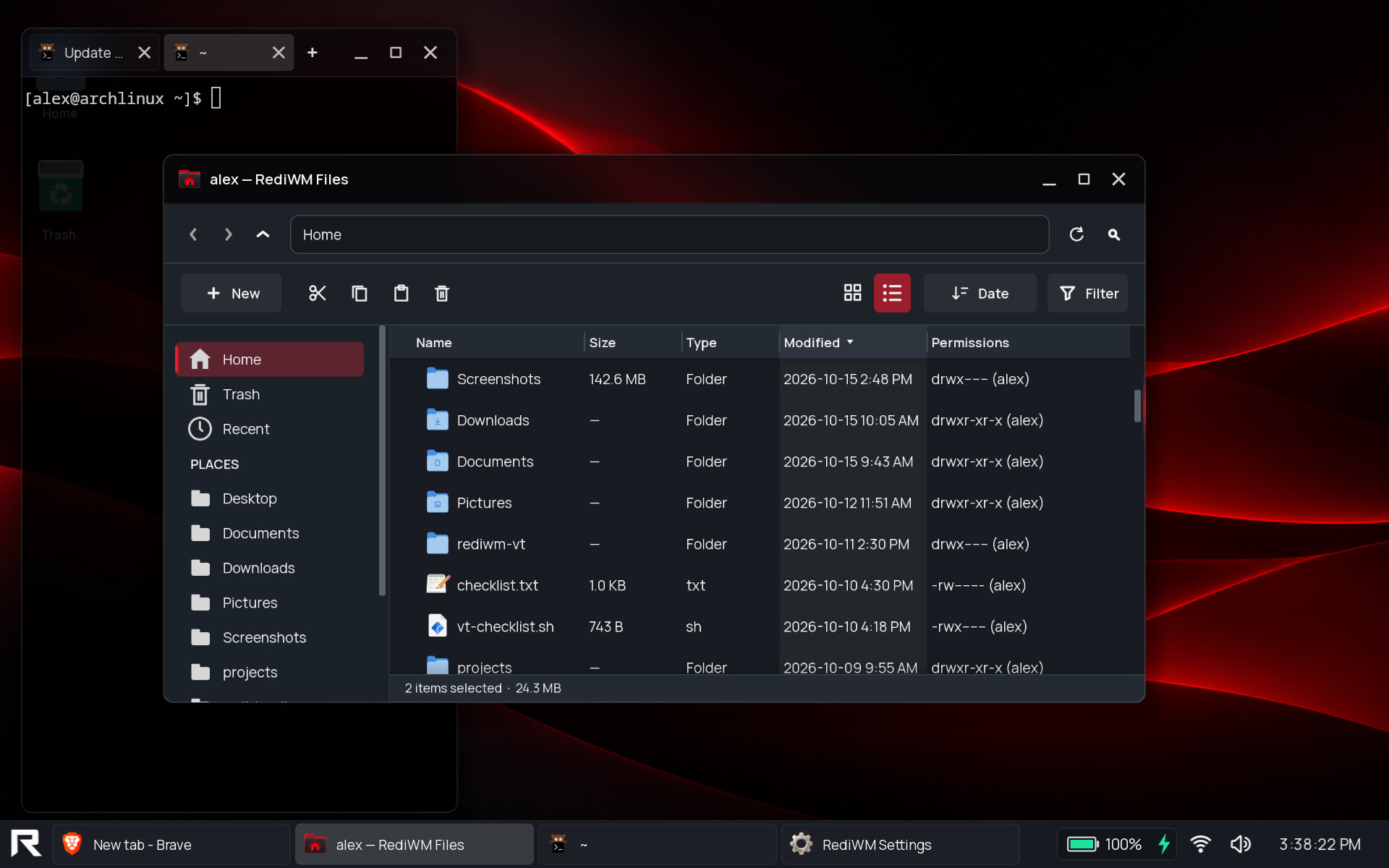
Hi All, not sure if such posts are allowed but wanted to share something (was gonna say I but now there are a few of us) been developing.
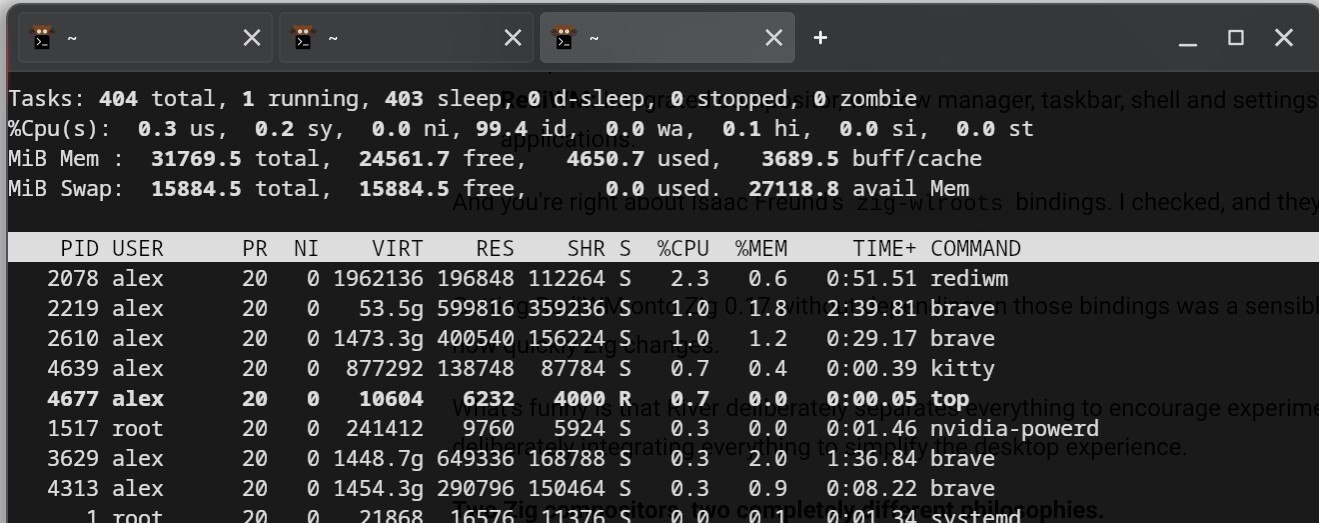
Most notable features is it’s a single process (<200mb rss idle), you don’t need another compositor (such as niri,hyperland), everything is in Zig (180k LOC), single process apart from the built-in apps obviously
with occasional C mixed in (and 1000+ automation tests in Python)
Just wanted to build sometihng that looks good, is themeable, boots faster than Gnome or Plasma (or even Mate and Cinnamon now on my machine).
PS. developed with AI - sorry if it bothers you but I am just a php developer!
My question as I’m trying to wrap my head around what this is, what this isn’t and why (though ‘because I could!’ is a perfectly valid answer!): Would you be ok with calling this project ‘an opinionated, integrated desktop environment built around a wlroots-based Wayland compositor’? What made you want such a thing?
Thanks! and thanks for the feedback, yeah I sort of started it as window manager only, for Wayland, and then slowly added window decorations because that’s what labwc does anyway, then the taskbar, then the settings panel.. and now it’s a full on DE pretty much!
So, yes , wlroots based (but slowly phasing it out) all in one desktop environment
Mostly because KDE/Plasma and Gnome aren’t quite what Im after , like Gnome looks nice but damn it’s still buggy, Plasma while more polished not quite as modern looking (in my opinion)
Some time ago I started daily driving niri + Noctalia shell, Dank shell, then tried labwc cause I wanted stacking.
but still it’s a lot of moving parts and labwc is also VERY basic. I also needed 3 essential (for me) features:
Bass boost (yep )
A GUI for cups/printing settings (I have a label printer which is fiddly)
A proper taskbar like in KDE Plasma
and a bunch of other things, all of which you can get separately to a degree but nothing that’s just one process like this!
For the same reason someone might wish to make a game by learning Vulkan instead of starting with a complete engine such as Unity: they simply want to implement the boilerplate and infrastructure themselves. I believe Hyprland took a similar trajectory, originally being wlroots based, but ended up implementing its own backend.
Often people just want to do it for learning purposes, to gain experience with the lower level APIs, they enjoy that type of work, are able to remove a dependency, etc. The list goes on and on.
Yep, that’s pretty much it! I’m not suggesting wlroots is bad or anything, quite the opposite. It’s been an excellent foundation for RediWM and many other such compositors.
I’d just like to become less dependent on it eventually, partly for the learning experience and partly to have more control over the entire stack. It’s a long-term ambition though, not something I’m rushing into.
Hyprland took a similar path, eventually replacing wlroots with its own implementations and Aquamarine for the backend. Which was quite a substantial undertaking!
@ForeverZer0 There are some really interesting compositors using custom Vulkan renderers now, too. I’ve deliberately stayed with GLES2 for RediWM. It’s still GPU-accelerated, has much broader hardware compatibility, and can potentially fall back to software rendering through Mesa.
Combined with Cairo and our own scene graph, it’s been working remarkably well so far. I don’t see much reason to replace the renderer just for the sake of using a newer Vulkan API.
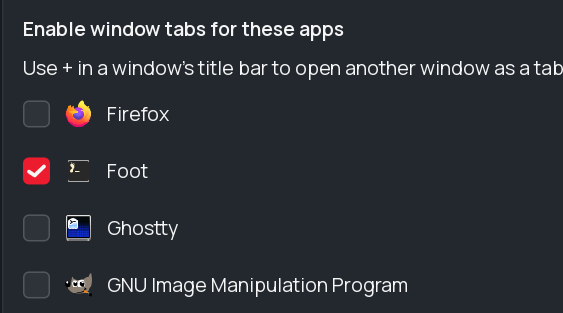
oh yes and I forgot to mention I wanted to have tabs in Kitty (or any terminal with no tabs) which doesn’t have them by default so I added them:
That is an understandable approach. I cannot imagine rendering being a bottleneck for a WM, and it is something that is capable of being swapped out or expanded upon later without breaking the user-facing API. Really the only tradeoff now is how you go about implementing effects, not capabilities. GLES2 is more than enough to render a desktop without taxing system resources.
One interesting thing I thought of is that you can now use Zig for SPIR-V, which you can then use later as-is with other rendering backends if you decide to include them. I haven’t experimented around with it yet, but makes Zig an attractive language for such a situation.
ohh nice ! thank you, yeah I will check it out, be cool to allow people to upload their own .frag shaders!
At the moment I am trying to work out if I should add a scripting language support, Lua or Luau perhaps, as some window managers allow changing of not only window decorations but also window behavior. I do have quite extensive TOML config and also a tonn of IPC calls for just about everthng, which I do call in unit tests in Python but it’s not quite the same.
This is pretty cool. I started a similar desktop project. I was curious how well claude actually works, and always wanted a lighter smooth desktop. And in two weekends it produced something thats functional.
So how much is written by AI? I am just curious because you say you want to remove wlroots to learn, but if AI is coding how much are you really learning? Did you look into River at all to see what was done there for inspiration? It looks good. I am not meaning to rail on the AI usage it is just more my curiosity. I am honestly trying to walk that balance of learning and getting things done with AI, and have come to the conclusion for things I want to learn I am just going to have do it myself.
 )