Building Virexon a WebAssembly runtime compiler.
1 Like
I’m spending a lot of time in a Hardware-in-loop CI system for MicroZig named Gauntlet.
After chatting with @jeffective and @JanBeelte I changed from a switched analog bus design to connecting everything with USB-C. The physical format I wanted was Eurocard, and it still mostly is, but we also made a 1U card, where 3 bolted together fit in a standard Eurocard slot.
Right now I’m focusing on bootstrapping the RP2040 test system, so that’s both the DUT and the test bench. I have two RP2040s as the test bench and one as the DUT.
I’m currently learning from the pico probe firmware for the main test bench chip to be able to program the other two chips on the board using SWD. I’m starting at the physical protocol, which is implemented using the PIO hardware block (highly suggest checking it out). I haven’t been able to produce the signals yet but I’m building out some debugging tools to help figure that out.
There’s going to be some interesting patterns with having a low level debugger accessing the secondary testbench RP2040. I was going to have this interface for flashing it, and use something like serial or SPI for the two MCUs to communicate. But I’m now realizing that I have arbitrary control of the processor, can load instructions at will and execute them. There’s no point communicating something over a different interface when I can grab it directly!
12 Likes
Been working on a frame timing graph for Flint. My original interest was understanding how much headroom I had to my target frame rate, but it’s also taken me down the rabbit hole of frame pacing and other adjacent topics.
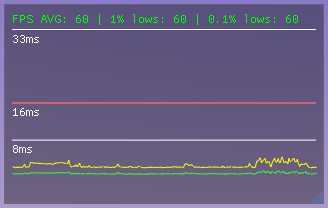
The graph shows how long from the frame start that updating the game state and physics completed (green line), drawing the game completed (yellow line), and waiting for the next frame (red line). Ideally the red line should be exactly on the target frame rate like in this screenshot. The space between the yellow line and the red line shows the headroom to the current frame rate target.
15 Likes
I’m still working on slap (painting app)
I’ve added a notion of live stroke to be able to modify it without baking paint in the canvas so I can straighten it, snap it to angles…
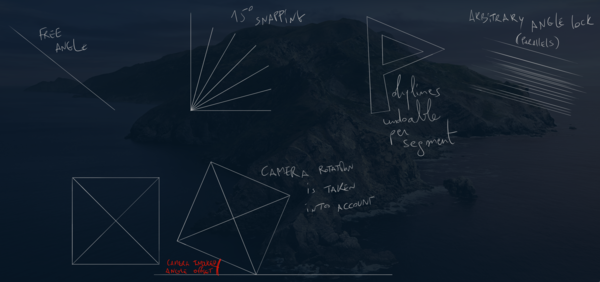
I’ll be updating my topic over the weekend hopefullyarr
14 Likes
Been getting back into amateur radio recently (KJ4TMP). Got my general class license last weekend at a swap meet and got a few new radios (Yaesu FTX-1 Field and Yaesu FT5D).
Brainstorming on an automatic antenna tuner project using an MCU supported by @mattnite 's microzig as a way to learn some more electrical engineering / pcb design w/ KiCad.
The reason I’m interested is (1) I need an antenna tuner because my FTX-1 doesn’t have one builtin and I want to try some non-resonant antennas since I live in an apartment and need to hide them, and (2) I like the idea of making and selling a few to this niche community (we serve the users), and (3) getting more experience in embedded will help me contribute to zig embedded ecosystem.
I also got a Nano VNA to help with building antennas and did my first SWR measurement (achievement unlocked).
Also planning the next Dig Day LA which should be December 5th, will announce in a separate thread / on zig.day once I get the location reserved.
8 Likes
Very nice. i skimmed through a video of yours and was inspired to implement my game-replay a bit like your undo.
2 Likes
Hey folks 
Only started using Zig the other week, really enjoying it so far!
I’ve wanted to explore how private/public key encryption works and thought it would be a neat idea to create a little server and client where you could send letters to your friends. I have essentially made a bad version of email, but I’m having a great time doing so!
What it looks like so far:
# Starting up the server

./postbox
info: Listening on 0.0.0.0
info: Processing request type: post
info: Processing request type: collect

----

# Sending a message, as the third argument is pub.key this is a message to myself
./postie send pub.key secret_do_not_share.key pub.key "Hi ziggit.dev"
info: Sent to server
info: Response Success

# Collecting the post from the postbox!
./postie receive pub.key secret_do_not_share.key
info: Received 1 letter(s) for you
info: Message Data: 'Hi ziggit.dev'
Initially I started by using libsodium which was actually a great way to learn out translate-c works, I was super impressed by how easy it was to integrate
Then I watched A tour of std.crypto in Zig by @jedisct1 which I’d highly recommend, it helped me move all the code to native Zig via std.crypto.nacl
I’ve got lots of ideas on where to take it next, like improving how the data is stored on the server, verifying friends public keys, allowing anonymous messages and implementing file attachments
Shout out to @pasta for answering my infinite questions and giving code feedback 
10 Likes
This is great!
Let me know if you have any questions about the crypto primitives in the Zig standard library (or libsodium, or whatever)!
-Frank.
5 Likes
I have been working on ZJ, an experimental, from-scratch Zig plugin for JetBrains IDEs. (GitHub)
Features:
Block folding, with function bodies and test declarations collapsed by default
Semantic highlighting, including names of functions, instance methods, comptime parameters, global variables, local variables, and fields
Completions for field names, enum literals, decl literals, error names, and builtin function names
Support for generics, including MultiArrayList
Exit point highlighting (return, break, continue)
Find Usages, with support for string identifiers
Go to Declaration
Go to Symbol, implemented with stub indexes to make it fast
Partially implemented:
Module imports, including build.zig imports declared in build.zig.zon
Peer type resolution
Error annotations, such as shadowed variables
Not (yet) implemented:
- Inlay hints
- Debugging
- Comptime interpreter
- …and much, much more
11 Likes
For the past few months, I’ve been figuring out a way to bring the composability of TUIs to GUIs, where, just like in a TUI, I can put the “screen” of a separate process into my own and send events to it.
Eventually, I settled on approaching it as a windowing library, where clients connect to a server acting as middleware between the native display server and the client, forwarding events and presenting shared buffers.
Recently, I finished a refactor inspired by pugl to allow the server to not require owning the window, making it usable with other windowing libraries, as long as you have access to the native handles.
Here’s a demo of dvui (custom backend) embedding other processes: Doom, some bouncing rectangles, and the demo itself.
Currently, I have it working for wayland and windows, and plan to support x11.
5 Likes
Currently on my first month learning zig. I’m working on a CLI for Megatec No-Break devices over USB, won’t post the link yet because the code is in such a bad shape it might cause eye injuries 
3 Likes
I’m currently in the middle of some exams, so I don’t have that much time for programming. But recently, I started a little Forth interpreter (that will maybe get embedded into my OS later, when the full Forth 2012 word set plus maybe some more got implemented) and it’s cool to make like one Forth word per evening, or maybe two (so still doing SOME little progress on my work, but not so much that it eats up my exam capacity).
I’ll give an update when the Core word set from Forth 2012 got finished.
3 Likes
I’ve been working on implementing a little(?) hrtf library and corresponding file format, inspired by the Google technical disclosure “Parametric Head-Related Transfer Function Using Structural Components and Spherical Harmonics.” So far, I’ve implemented the Blockhead model with a cubic fractional delay and one-pole filter.
What I have so far is benchmarking at a 1% low of around 230ns per 128-sample block when compiled for x86_64_v3 on my computer!
This will get slower with the addition of a filter bank emulating the pinna, but because this is executing in series with said filter via an intermediate buffer, is still on the hot path (at least, that’s what I tell myself to justify spending some time making a probably needlessly fast cubic fractional delay). It’s been a fun learning experience so far!
As I go, I’m trying to figure out how many times I want to rewrite a piece of code before moving on, and my current trend seems to be 2-3 times, depending on the task. My first implementation of a new feature seems to pretty consistently be exploratory, since I don’t yet know exactly what needs to be done or how I want to structure it.
LLM usage note: I’ve been using language models to test if my performance and fitting hypotheses are correct/workable before spending the time to make my own implementation(s) of the idea.
3 Likes
Building an astronomical library using NASA’s CSPICE toolkit and ephemeris kernels, alongside a Vulkan-powered graphics engine to visualise celestial bodies at their calculated positions in real time, including the sunlight and shadows they produce on objects on Earth.
8 Likes
I am working on zeb which is originally a simple cli that for decode/encode uri and uriComponents. I found it weird that we needed an entire runtime like node, or use a browser to do these.
3 Likes
That sounds really cool. Any chance to get a look at the source code soon?
Hi all, I am new here and new to zig. But that both changes this week as I’ll be taking my first steps. The plan:
- Today I follow the “Learn Zig by building Space Invaders” by Code with Cypert on yt to get my feet wet. Currently fighting raylib on wayland on NixOS, but that is part of the fun haha
- on Tuesday some file reading and writing. I have some utilities in mind like
lsmobo,lsiommuand others which will read from/procand/sysand output human readable overviews - on Wednesday I will try out compiling to WASM, no plan yet
- on Thursday I have other fish to fry
- on Friday… I will be an expert

5 Likes
Yeah for sure when I reach a substantial milestone. So far I’ve only connected cspice and can retrieve the position of the Sun, earth and moon for a hardcored date and time. With vulkan ive only just created the vertex buffer lol
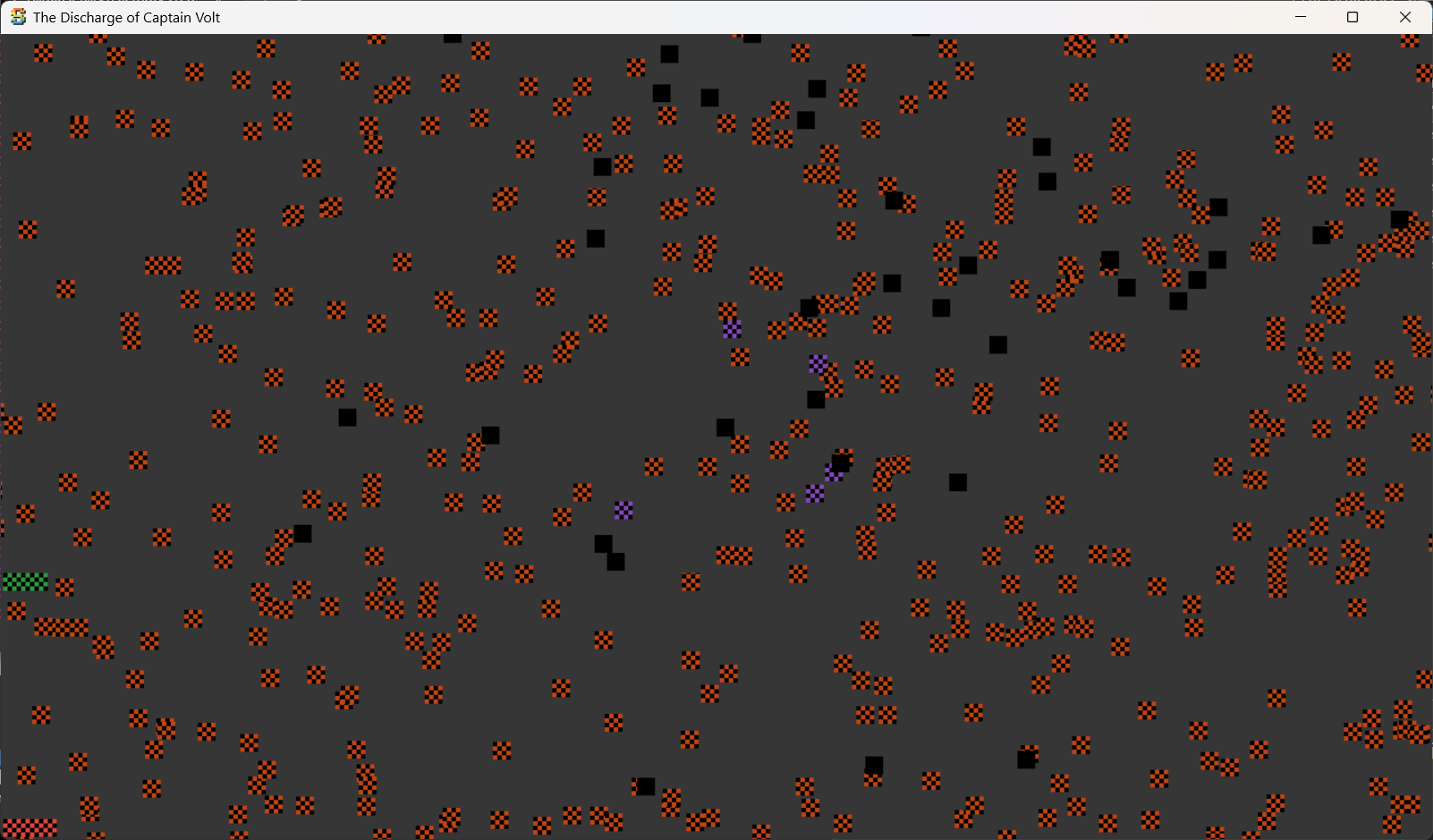
I’ve been porting my jam entry to Vulkan from September, and honestly, it was kind of a chore, to say the least. And I must admit that the progress was very slow.
So, I’ve decided to switch to Sokol instead. And now I’ve finally got the bouncing quads on the screen!
3 Likes
The discharge of captain Volt
Love it!